Don't ask which job AI replaces — ask which tasks inside the job — Reading Microsoft Suleyman's 18-month prediction right
Microsoft AI CEO Mustafa Suleyman predicts that within 18 months, AI will reach human-level performance on most professional tasks. The real question isn't "which jobs disappear" — it's "which tasks inside each job get replaced by AI."
What gets replaced: information-processing tasks that finish at a computer. What stays: final judgment, negotiation, accountability, context. What goes up in value in the AI era: connection capability (context × implementation × driving organizations) — with Applied Engineer / FDE at the center.
The right question in the AI era isn't "which job disappears" — it's "which tasks inside the job get replaced." Information processing goes to AI; judgment and connection stay human.
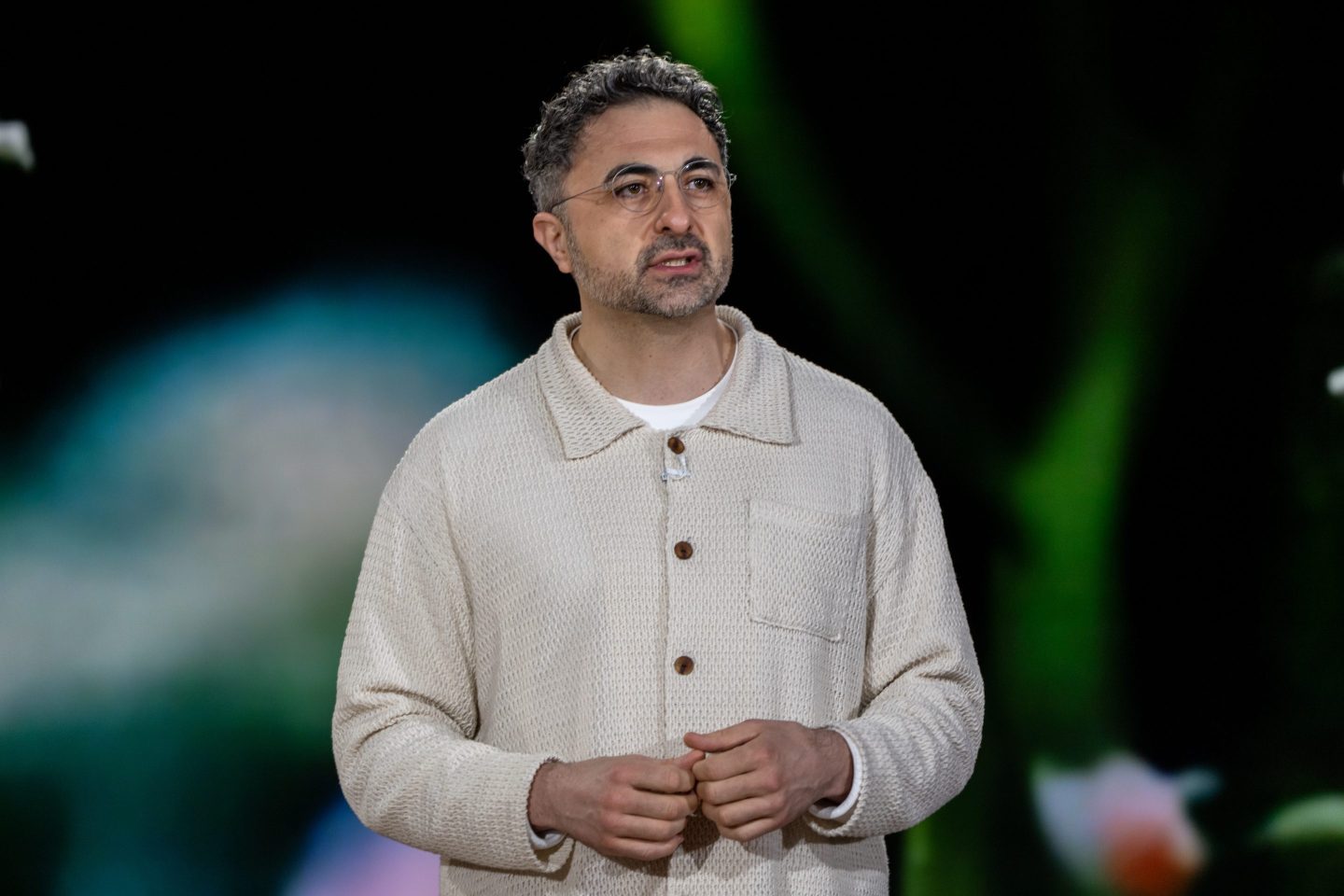
- Suleyman: in 12-18 months AI hits human-level on most white-collar tasks. Anything "sitting at a computer" is on the table.
- What gets replaced is not job titles — it's information-processing tasks done at a computer (shared across legal, finance, marketing, PM, SWE).
- What stays per role: final judgment, negotiation, accountability, contextual understanding. Jobs don't disappear; the center of gravity shifts.
- What goes up in value: connection capability (context × implementation × driving organizations) = Applied Engineer / FDE.
Suleyman's 18-month prediction and Microsoft's bet
In 2026, Microsoft AI CEO Mustafa Suleyman has gone on record with strong claims. From Fortune:
"human-level performance on most, if not all professional tasks" — across nearly every professional task, AI reaches human level.
"Creating a new model is going to be like creating a podcast or writing a blog" — creating a new AI model becomes as casual as recording a podcast or writing a blog post.
The timeline: 12 to 18 months. Suleyman explicitly says anything done "sitting down at a computer" is in scope.
Microsoft isn't bluffing — Copilot, Copilot Studio, Foundry, the 1-million-person AI training investment in Japan: the company is betting its product strategy on this future. Behind the AI adoption problems I covered in the previous article, this exact restructure is already in motion.
"Which jobs will disappear?" is a natural first question — but the resolution is too coarse. A job isn't the unit. Inside any job there are 10-30 tasks, and AI replaces them task by task.
"Jobs disappear" vs "tasks get replaced"
Reading Suleyman as "do lawyers disappear? do accountants disappear?" gets you nowhere. Each role stays — but its inner content gets rebuilt.
Take "lawyer" not as a single label but as 15-20 tasks:
- Contract review, case research, clause sorting — these go to AI
- Client negotiation, final judgment, taking accountability — these stay human
Same title; entirely different time-allocation after AI gets involved. That's what "center of gravity shifts" means.
Line up 5 roles by "tasks that get replaced"
Concretely, lay out the automatable tasks across five white-collar roles. They line up suspiciously well:
- Legal: contract review / case research / clause sorting / legal requirement mapping / document drafts
- Finance: journal entries · aggregation / reporting / audit support / invoice ops / monthly & yearly close
- Marketing: ad copy / data analysis / social posts / market research / impact reports
- Project management: meeting notes / status tracking / WBS updates / task sorting / agenda creation
- Software engineering: code generation / test writing / review aid / bug detection / documentation
Different industries, identical task shape. That overlap is the heart of Suleyman's prediction.
What unifies these: "the person who organizes information"
The shared property across these five roles is that the tasks all sit on the same information-processing pipeline: gather → organize → summarize → classify → materialize → report → first-pass judgment.
What gets replaced is the person who organizes information. Not the source of information, not the final consumer — the layer in between who makes it usable.
That layer has propped up organizations as "admin staff," "assistant work," "the bottom half of middle management," and "the hands of professional roles." It thins out in 18 months.
Where does the value stay per role?
What stays inside each role? Importantly, the shape of "what stays" is the same across roles.
>5-1Legal — what stays
- Final judgment / negotiation / accountability / risk calls / ethical decisions
>5-2Finance — what stays
- Linkage to executive decisions / internal control / accountability / audit response / strategic insight
>5-3Marketing — what stays
- Customer insight / brand judgment / hypothesis testing / reading market context / connection to business strategy
>5-4PM — what stays
- Stakeholder management / decision design / crisis response / expectation management / team building / prioritization
None of these "finish at a computer." Organizing information and taking judgment + accountability look similar; they aren't the same.
The shape of AI-era talent
From organizers to connectors
The core AI-era capability = connection
What unites the residual values (judgment, accountability, relationships, context) is that they're not isolated skills; they're connective acts.
Specifically: one person (or one small team) carrying all three axes:
- Context: read the customer's real pain, redesign how work flows
- Implementation: build with AI / code / automation
- Driving the organization: roll out, get adoption to stick, turn it into outcomes
Having just one or two of these was already valuable. But in the AI era, only people who connect all three break through. Why? Because the single-skill information-processing layer gets replaced, so what's left as a differentiator is precisely the connector.
The "organizer" loses value. The "connector" gains value. Outsource organizing to AI; concentrate human attention on connecting.
Why Applied Engineer / FDE sits at the center
The role that most naturally embodies this connection capability is the Applied Engineer / FDE (Forward Deployed Engineer) — established at Palantir, now a growth category at AI startups and increasingly inside enterprises.
>7-1Why FDE wins in the AI era
- Upstream (problem discovery): reads context — the thing AI can't do
- Build (AI / code): stands on the "wielding AI" side, not the "wielded by AI" side
- Land (adoption): turns builds into outcomes — the least replaceable layer
>7-2This isn't really about a job title
Whether someone literally calls themselves "FDE" doesn't matter. What matters is whether they can carry all three layers in one person or small team:
- Independent FDEs (freelancers, contractors)
- Internal FDEs evolved out of IT / DX-driver roles
- SI / consulting firms' FDE squads
- "Knows the field × knows AI" product leads inside operating companies
Call it anything. The question is: do you have connectors internally / in the market, or are you becoming one?
The internal AI adoption playbook is in "Beyond 'Deployed but Unused' — Designing Internal AI Adoption." The "AI Champion" mechanism in that article is essentially a seedbed for internal FDEs.
AI era runs on "principles," not "templates"
One layer deeper: can we template / standardize the FDE's moves? Difficult.
| Domain | Rate of change | Standardizable? | What works |
|---|---|---|---|
| Construction | Low | Yes (process-able) | Pattern application |
| Software | High | Hard | Principles + application |
| AI | Very high | Mostly no | Principles + strong connection |
In high-change domains, concrete how-to guides and tool usage manuals rot fast. Six months later a new model arrives, a different framework becomes default, a new pattern is recommended.
What persists: principles and fundamentals:
- What context do we pass to AI? (not prompt engineering — information design)
- Where do we hand off to AI vs. keep human judgment? (boundary design)
- How do we define and measure outcomes? (KPI design)
- How do we capture failures and turn them into learning? (feedback design)
These aren't templates — they're axes of thinking. Tools change; the axes carry over. That's what "standardization" really means in the AI era.
Classical methodologies aren't really about standardizing operational detail. They standardize roles, cadence, decision structures to face change and uncertainty. Hold the principles and fundamentals, and you can apply them no matter which tools come and go.
Jobs don't disappear. Tasks get replaced. What stays is connection.
Read Suleyman at the surface: "jobs disappear." One layer down: "the information-processing tasks inside jobs disappear." Deeper still: "what stays is judgment, accountability, connection."
The personal play is clear:
- Inside your role, inventory the information-processing tasks that finish at a computer — these go to AI first
- Thicken the final judgment / negotiation / accountability / context part of the same role — that's where human time should pool
- Train connection capability deliberately — own all three axes (context × implementation × organizational drive) in one person
The organizational play follows: stop hiring/promoting more "organizers"; orient evaluation, hiring, and growth toward "connectors."
What wins in the AI era is not a job title but connection capability. Applied Engineer / FDE sits at the center — though if you carry all three layers, you're playing the same role under any name.